Why Aynor, SC Homeowners Choose Spray Foam Insulation (Open-Cell vs. Closed-Cell Explained)
In Aynor's Zone 3A hot-humid climate, the wrong insulation type does not just underperform — it can trap moisture inside your walls or crawl space and accelerate wood rot. Because Aynor sits about 35 miles inland from Myrtle Beach, summer dew points regularly climb above 70°F, which means any gap in your building envelope lets warm, wet air push straight into your home. Choosing between open-cell and closed-cell spray foam comes down to where you are installing it and how much moisture that surface sees.
Why Aynor Homes Need More Than Standard Insulation
Standard fiberglass batts insulate against heat transfer but do almost nothing to stop air movement — and air movement is exactly how humid outdoor air gets inside Aynor homes. When warm, moisture-laden air hits a cooler surface inside your wall or attic, it condenses, and that cycle repeats every summer day.
Many homes in Horry County were built with vented crawl spaces and minimal attic air sealing — both common entry points for ground moisture and radiant heat gain. Spray foam expands on contact and seals gaps simultaneously, addressing both the thermal barrier and the air infiltration problem in one pass. That combination is why it outperforms blown-in or batt insulation in this region.
What Is the Difference Between Open-Cell and Closed-Cell Spray Foam?
Open-cell foam is softer, vapor-permeable, and achieves roughly R-3.5 to R-3.8 per inch; closed-cell foam is rigid, acts as a near-impermeable vapor barrier, and delivers roughly R-6 to R-7 per inch. The right choice depends on the application, not just the price tag.
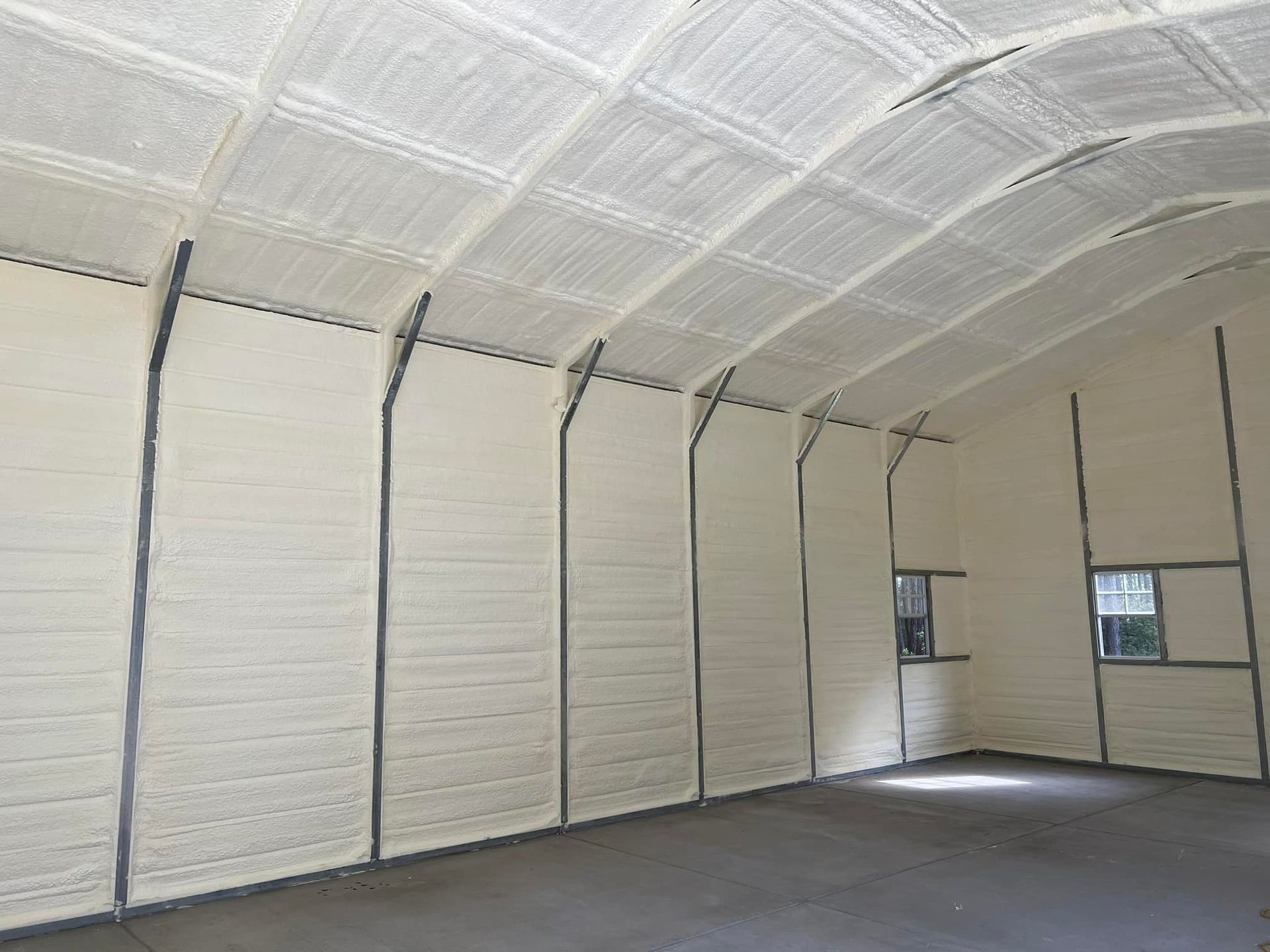
Open-cell foam expands to about 100 times its liquid volume, making it effective at filling irregular cavities in interior walls and attic decks where you want the structure to breathe slightly. Closed-cell foam expands only 30 to 40 times its volume but cures into a dense, rigid layer that actually adds structural strength to walls and roof assemblies — a meaningful bonus during the occasional winter cold snap that stresses Aynor building envelopes.
For attic insulation in Aynor, open-cell foam applied to the roof deck can cut summer cooling loads noticeably by creating a conditioned attic space. But for crawl spaces and exterior walls directly exposed to ground moisture, closed-cell is the stronger performer because it qualifies as a Class II vapor retarder — it physically blocks moisture migration rather than just slowing it.
Matching Foam Type to the Right Spot in Your Home
Crawl spaces under Horry County homes sit over soil that releases moisture year-round. Closed-cell foam applied to the crawl space walls and rim joists creates an encapsulated environment that interrupts that moisture path before it can feed mold or rot the floor framing above. Air sealing services paired with closed-cell foam in this zone work as a system — the foam seals and insulates while cutting off the humid air pathway at the same time.
In attics, open-cell foam is often the cost-effective choice when you are insulating the underside of roof decking and do not need a vapor barrier at that surface. Attic air sealing alone can reduce cooling loads by 15 to 25 percent in hot-humid climates, so this application zone offers one of the highest returns in an Aynor home.
Rim joists and band joists — the framing sections at the perimeter of your floor system — are another high-priority spot. These narrow cavities are almost impossible to air-seal with batts, but a two-inch application of closed-cell foam seals and insulates them in one step, stopping the cold-floor effect that many Aynor homeowners notice in winter.
Is Spray Foam Worth the Investment in Aynor's Climate?
Quality spray foam is designed to last the lifetime of the structure — 80 or more years in properly installed conditions. Unlike fiberglass batts, it does not sag, compress, or absorb moisture over time, which means its thermal performance stays consistent rather than degrading after a few humid summers.
The long cooling season in the Pee Dee and Grand Strand region means every improvement in air sealing and insulation performance pays dividends for more months per year than it would in a northern climate. Homes with poorly sealed crawl spaces also tend to run HVAC systems harder to compensate for the moisture load, so encapsulating that zone can reduce both energy use and equipment wear.
What Aynor's Hot-Humid Seasons Mean for Installation Timing
Spray foam cures fastest when temperatures are between 60°F and 90°F with moderate humidity — conditions Aynor sees for much of the year. Installations done during the cooler months from October through March let crews work in more stable attic temperatures, but the product performs year-round when applied correctly.
Horry County building codes require insulation work to meet IECC Zone 3A minimum R-values, and closed-cell foam reaches those thresholds in fewer inches than open-cell, which matters in tight crawl space or rim joist applications where depth is limited. A local professional familiar with county permit requirements can confirm the right thickness for each application zone before work begins.
Getting the foam type and thickness right from the start prevents the costly scenario of pulling out underperforming insulation years later — a situation more common with homes that used generic contractors unfamiliar with coastal SC moisture dynamics.
Matching the correct foam type to each part of your home is the single most important decision in this process, and it produces measurable results: lower energy bills, drier crawl spaces, and more consistent indoor temperatures across Aynor's long, humid summers.
Schedule an assessment with Foam Insulation Services LLC to identify which foam type fits each zone of your home and get a clear picture of what the upgrade will deliver.